
UNWE - Green University
UNWE is an institution committed to the sustainable future. Our university's mission is not only to educate young people but also to create sustainable habits to protect the environment. Several green projects have been implemented since the beginning of the new century.
In 2023 the University became the Coordinator of the National Sustainable Development Solutions Network - SDSN Bulgaria established by the United Nations to encourage the implementation of the Sustainable Development Goals of the World Organization.
 |
 |
Since 2016 the UNWE is among the first institutions in Bulgaria to join the global initiatives for social responsibility and sustainable development and has become a member of the UN Global Compact /UNGC/ as one of the four Bulgarian universities members of the organization. In the framework of this initiative the UNWE implements a number of activities and various events promoting a sustainable economy for the protection of the workforce and the environment.
UNWE is one of the first universities in Bulgaria paying serious attention to the incorporation of the green energy. Building a renewable energy system is part of the University policy and a step towards its turning into a green university.
 |
UNWE – Sustainable Development with Tangible Results
UNWE consistently implements a policy aimed at improving the energy efficiency, the rational use of resources, and the sustainable development of the university environment. The programme to improve the energy efficiency of the University’s building stock was launched in 2020, and the measures taken are already producing measurable results.
Key areas of focus include the electricity generation from renewable sources, smart energy management, the modernization of lighting and heating systems as well as the development of electric vehicle infrastructure.
Two Photovoltaic Parks
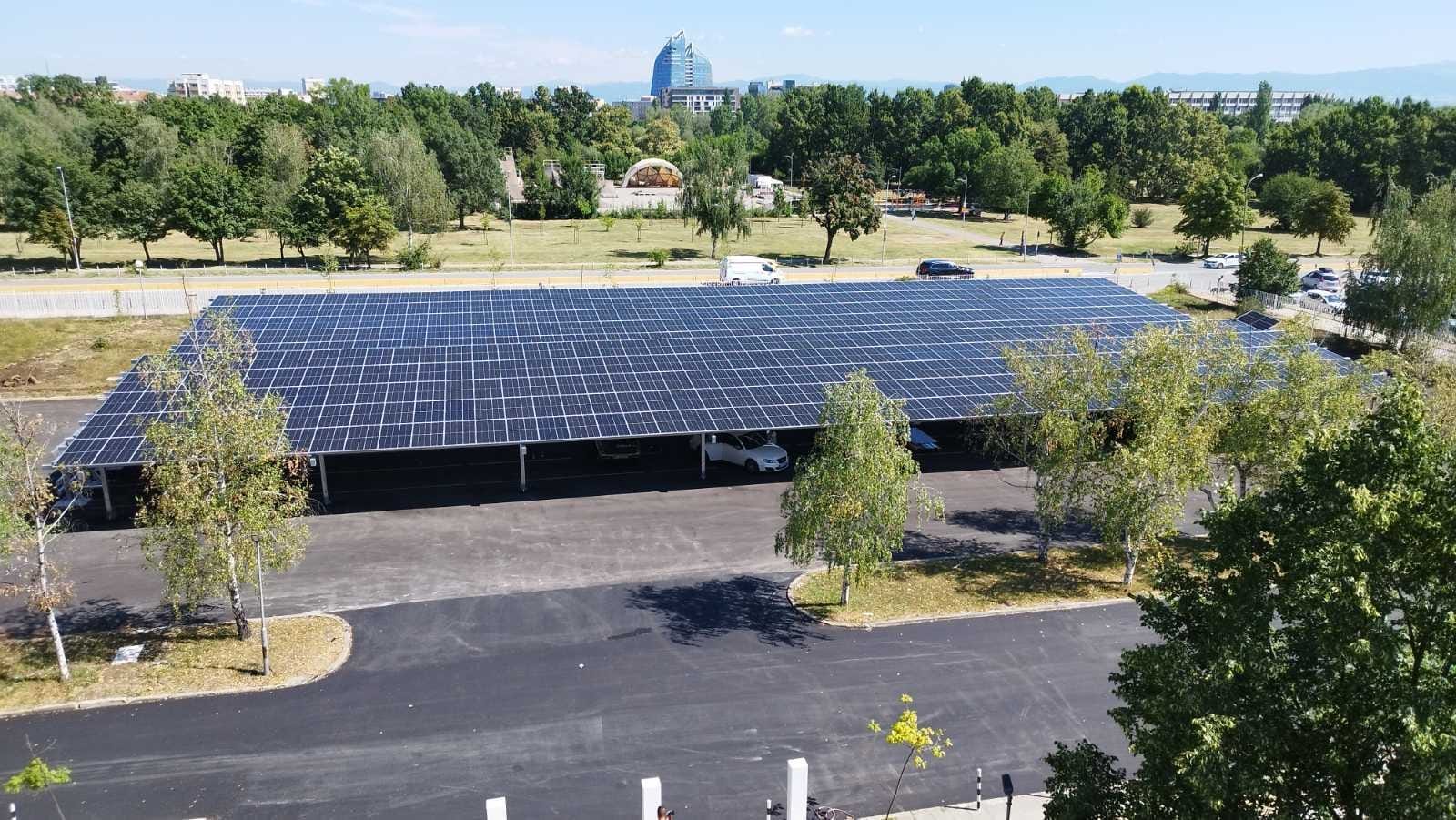
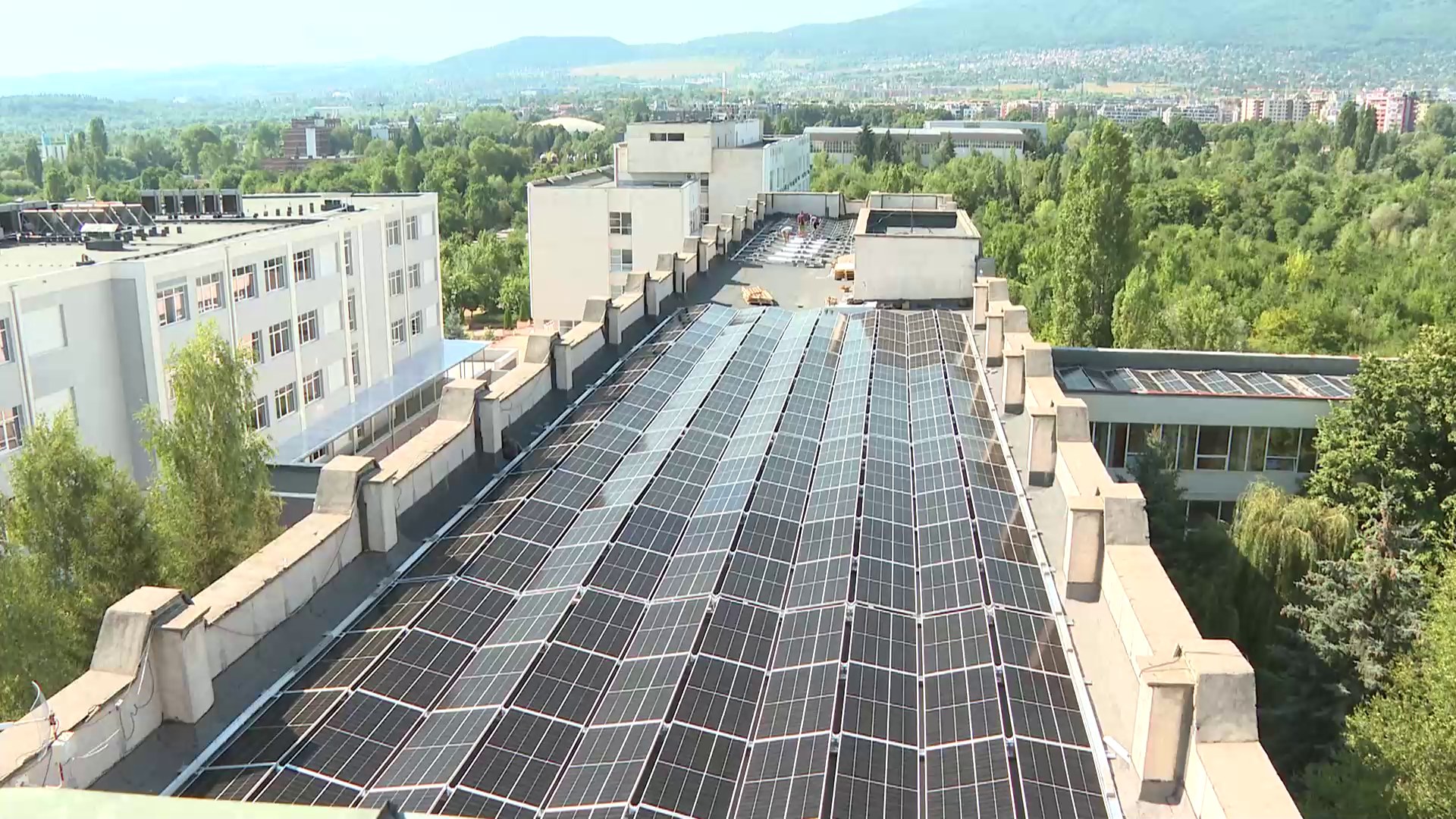
The UNWE has two photovoltaic parks - one on the roofs of the University buildings and one on the newly constructed parking lot. The total area of the installed photovoltaic panels is 3 910.81 square meters - 2 830.36 square meters are located on the roofs, and 1 080.45 square meters are on the parking lot.
The two plants comprise a total of 1 774 photovoltaic panels - 1 284 on the roofs and 490 on the parking lot.
 |
 |
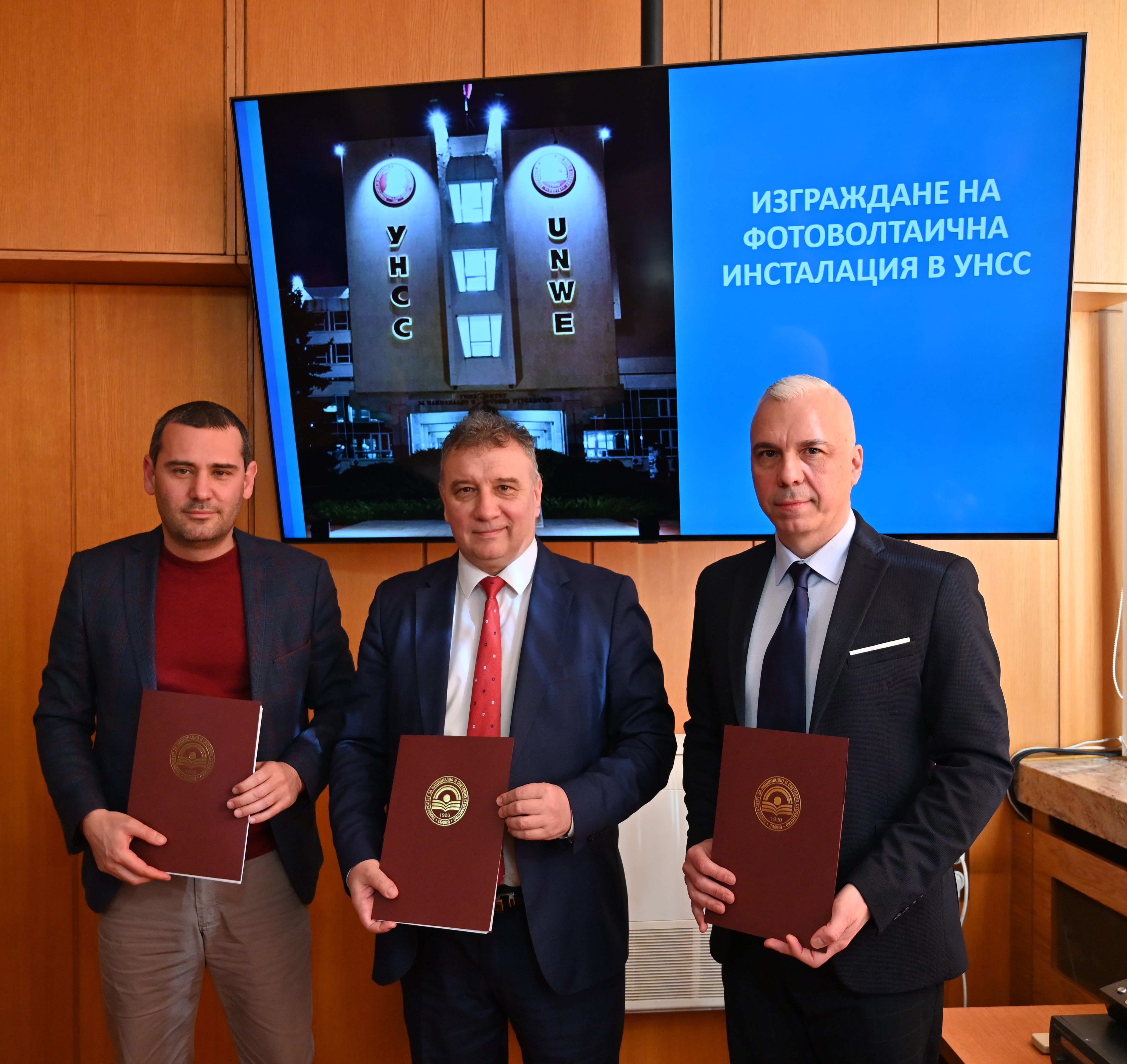
The beginning has been set in February 2023 with the signing of an ESCO contract by the Rector Prof. Dimitar Dimitrov for the implementation of a public contract for the utilization of energy from renewable sources through the construction of a photovoltaic installation for electricity generation. The contract is the result of an energy efficiency audit of the university building developed by a licensed company and accepted by a specialized committee.
 |
The project was implemented in two phases. The first stage /8 months/ consisted of the design and construction of the photovoltaic installation for the production of electricity on the roof of the university building and one on the parking lot. The second stage involved monitoring the achieved results, maintenance and repayment of the investment on account of the electricity generation which activities are undertaken by the ProStream Group. The funding of the project at the amount of more than 2 millions BGN has been provided by the ProStream Group and the investment will be repaid at the expense of the electricity savings generated by the operation of the photovoltaic plant. The construction supervision was carried out by Bureau Veritas Bulgaria.
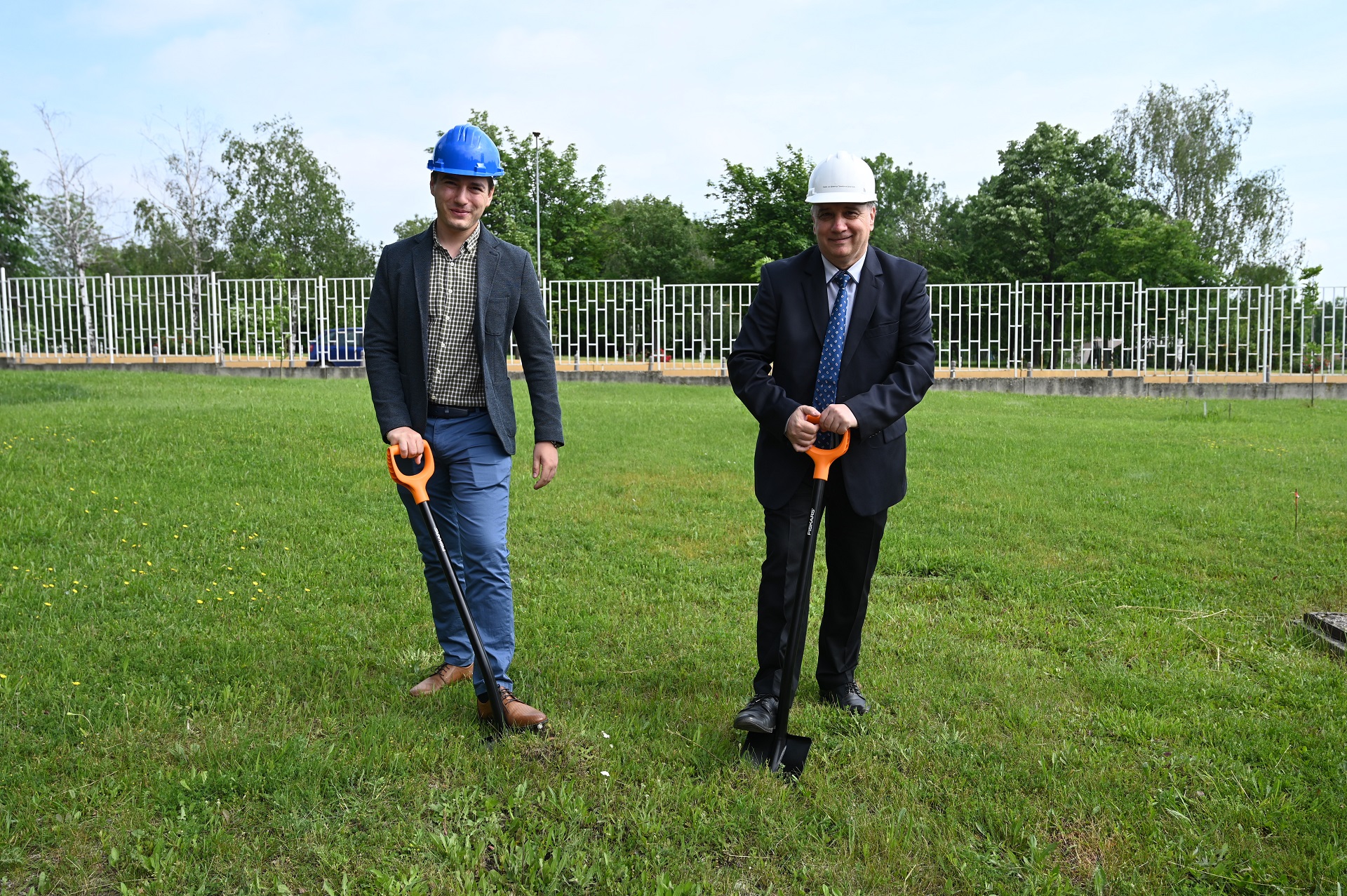
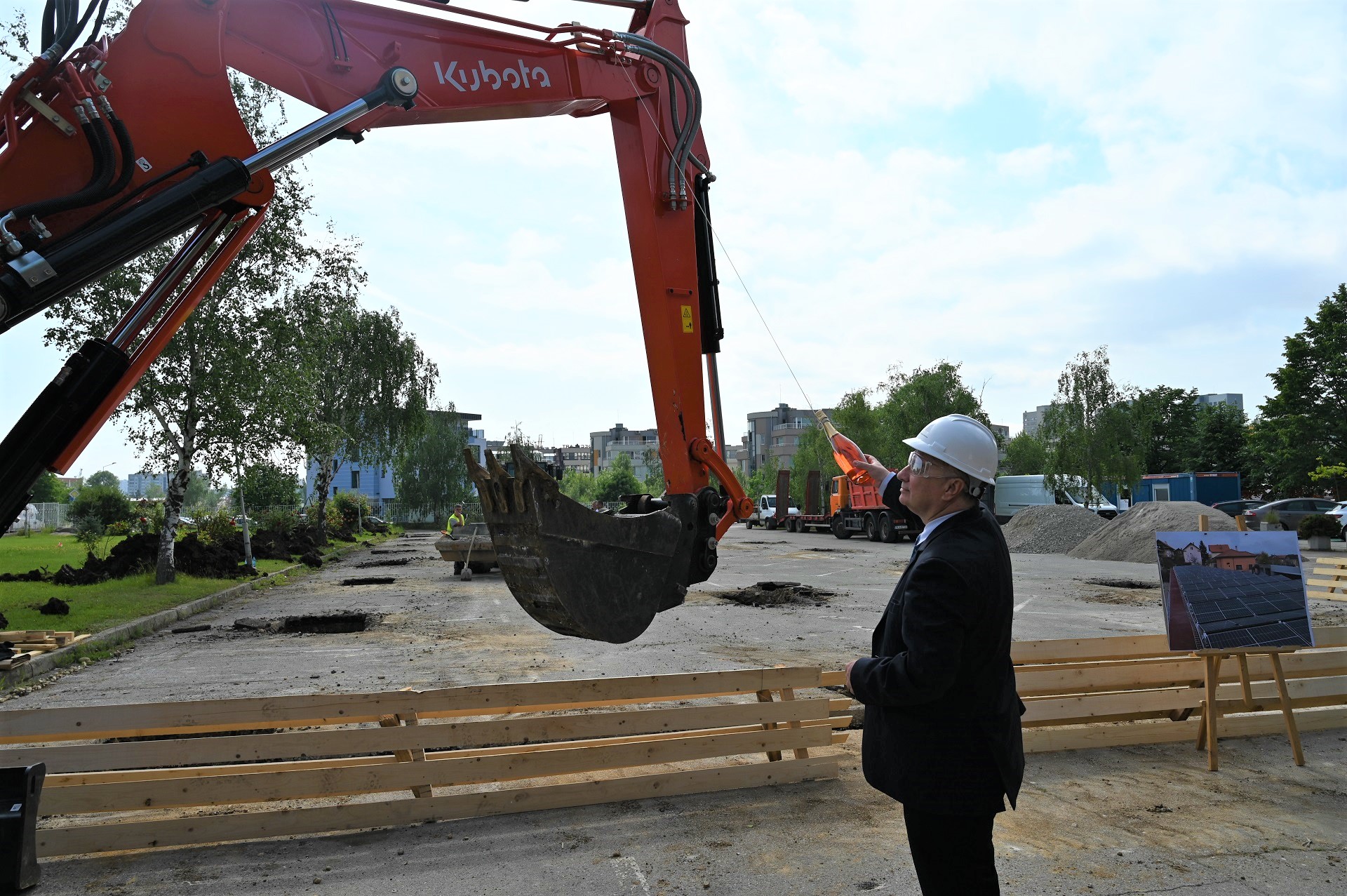
The first sod for the construction of the photovoltaic park was made by the Rector Prof. Dr. Dimitar Dimitrov and Andrey Stoychev, representative of the contractor, on 5 June 2023 - World Environment Day.
 |
 |
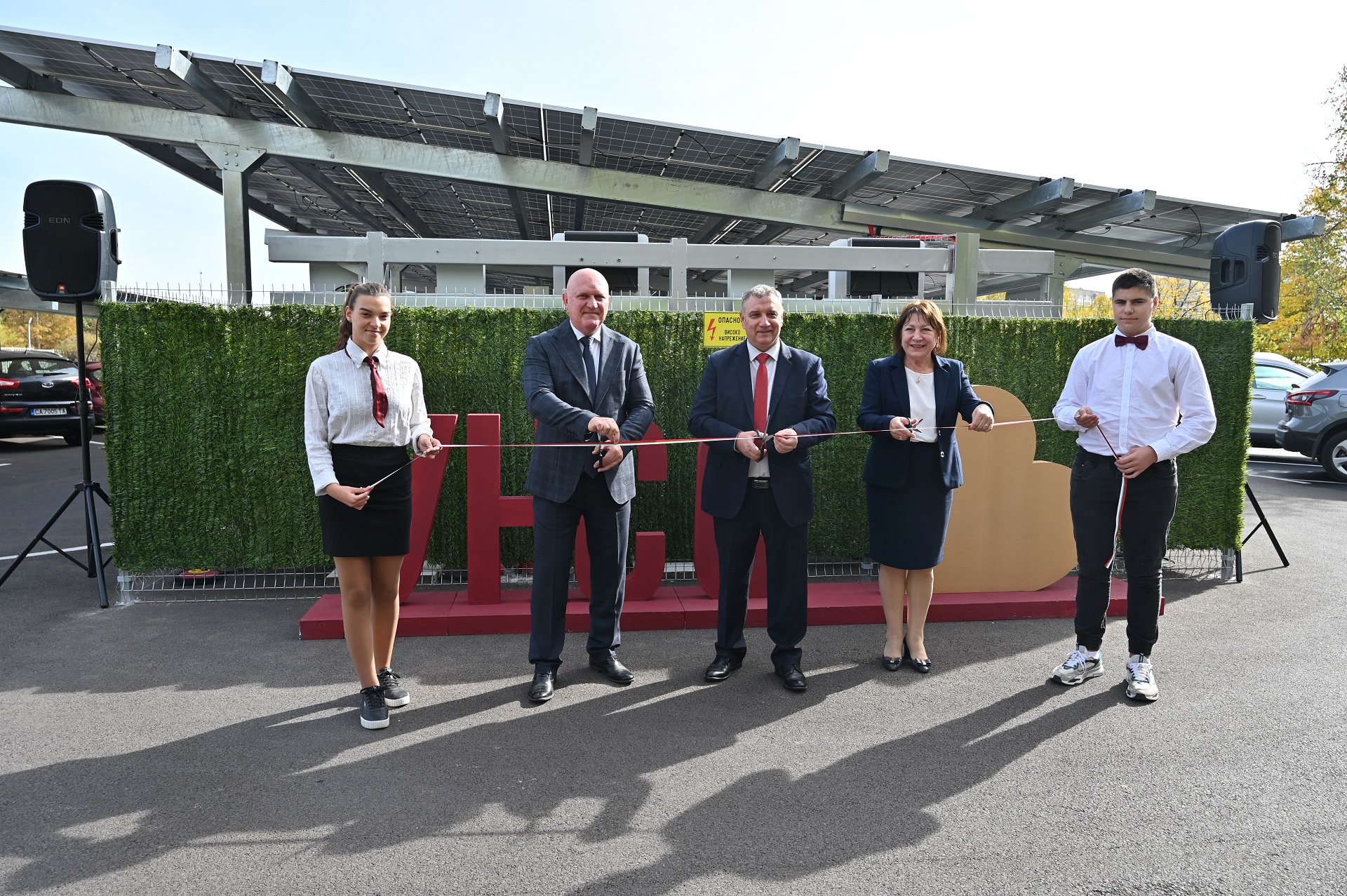
The photovoltaic park was officially opened by the Rector Prof. Dr. Dimitar Dimitrov and the Minister of Education and Science Prof. Dr. Galin Tsokov on 24 October 2023.
 |
The photovoltaic park is part of the UNWE Energy Efficiency and Sustainable Development Policy Programme. The new facility is a natural continuation of efforts towards energy independence and green economy providing an added value to the University as well as to the environment and society.
The photovoltaic system was incorporated in exploitation on 1 December 2023 and has an expected operational life of over 25 years.
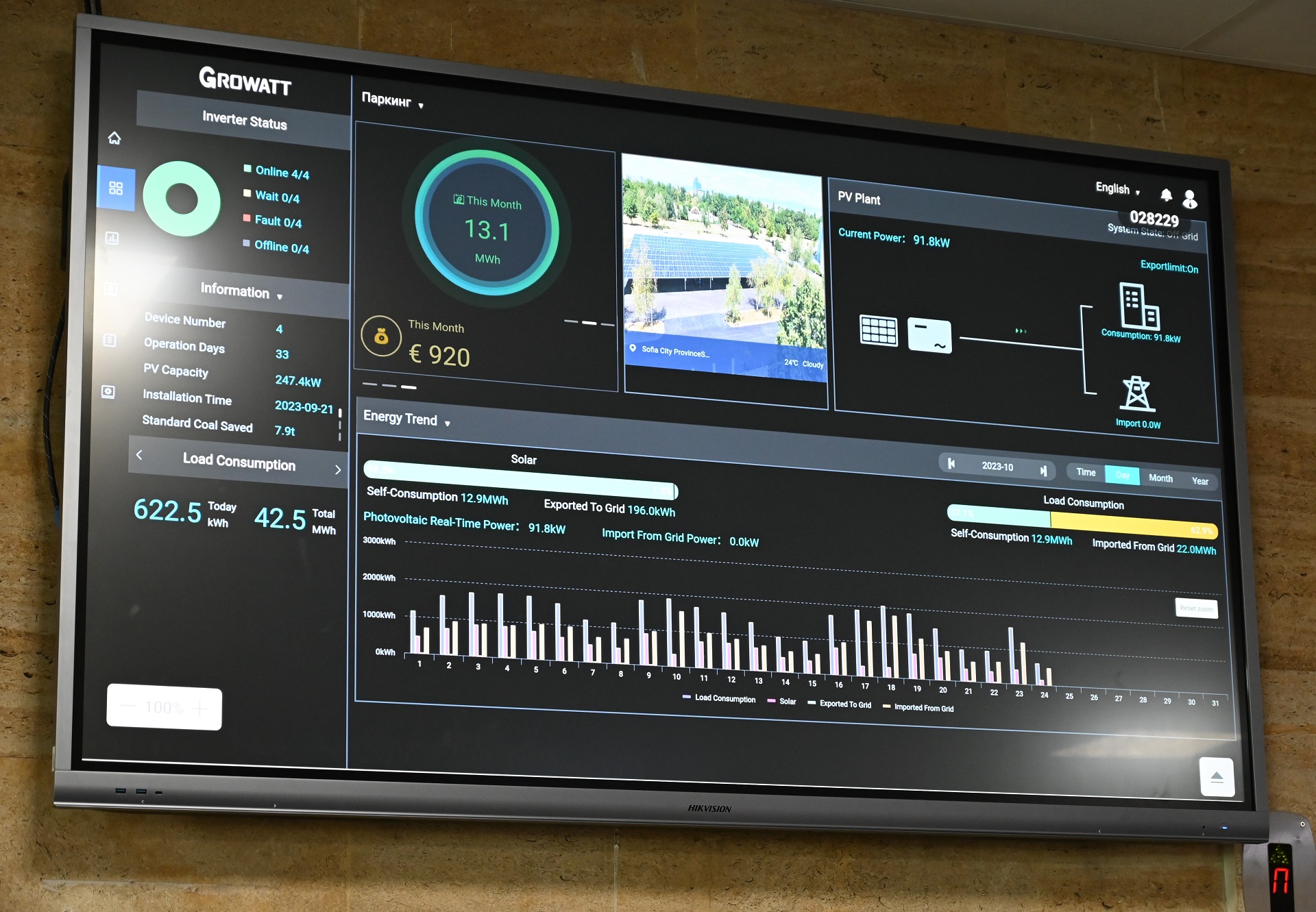
The two power plants generate approximately 840 600 kWh of electricity annually and in 2024 the electricity generation totaled 891 703.36 kWh, of which 670 426.36 kWh was used for on-site consumption, and 221 277 kWh was sold to the power distribution grid.
In 2025, the electricity generated was 840 598.9 kWh. Of these, 629 171.15 kWh were used for on-site consumption, and 211 427.75 kWh were fed into the electricity distribution grid.
In 2026 /from January through the end of August/, the photovoltaic power plants generated 780 936.9 kWh, with the highest monthly generation recorded in June - 142 356.9 kWh.
Generating its own electricity reduces the necessity of purchasing electricity from the grid and helps limiting the university’s carbon footprint. According to the UNWE data, the two plants save approximately 630 metric tons of carbon emissions annually.
The expected payback period for the investment in the photovoltaic power plants is about six years.
Smart Home System - Intelligent Resource Management
The energy efficiency at the UNWE is developed not only through the production of clean energy, but also through the intelligent management of its consumption.
The construction of the Smart Home System has begun in January 2023 and it is part of the University’s programme to improve the energy efficiency. The system enables remote and automated control of various appliances and environmental parameters - lighting, heating, air conditioning and other devices.
The system is part of the University’s energy resource management and is an integral part of the programme to improve the energy efficiency at the UNWE.
A Control and Monitoring Center has been established, through which the system can be monitored and controlled in real time. So far 406 devices for controlling the indoor environment have been installed in the work areas and the data from the sensors and controllers is displayed in the Control Center.
 |
The system allows the automatic shutdown of certain energy-consuming devices when windows are opened or when a room is intentionally cooled, as well as remote temperature control, turning devices on and off and monitoring the system’s status on a detailed map of the University.
The full implementation of the system at UNWE is scheduled to be completed by 30 October 2027 with the objective of achieving potential savings of up to 40% in electricity and heat consumption.
The system is being implemented with funding from the Ministry of Education and Science.
More Efficient Lighting
Upgrading the lighting system is one of the key measures for reducing the energy consumption at the University.
As part of the programme 8 400 of a total of 8 600 fluorescent light fixtures have been replaced with energy-efficient ones and the lighting in the buildings has been upgraded with LED technology. Motion sensors have also been installed in restrooms to turn on the lights only when necessary.
This ensures that the daily use of University spaces is combined with more efficient electricity consumption.
Smart Lighting and Energy Efficiency System at Bonsist Sports Complex
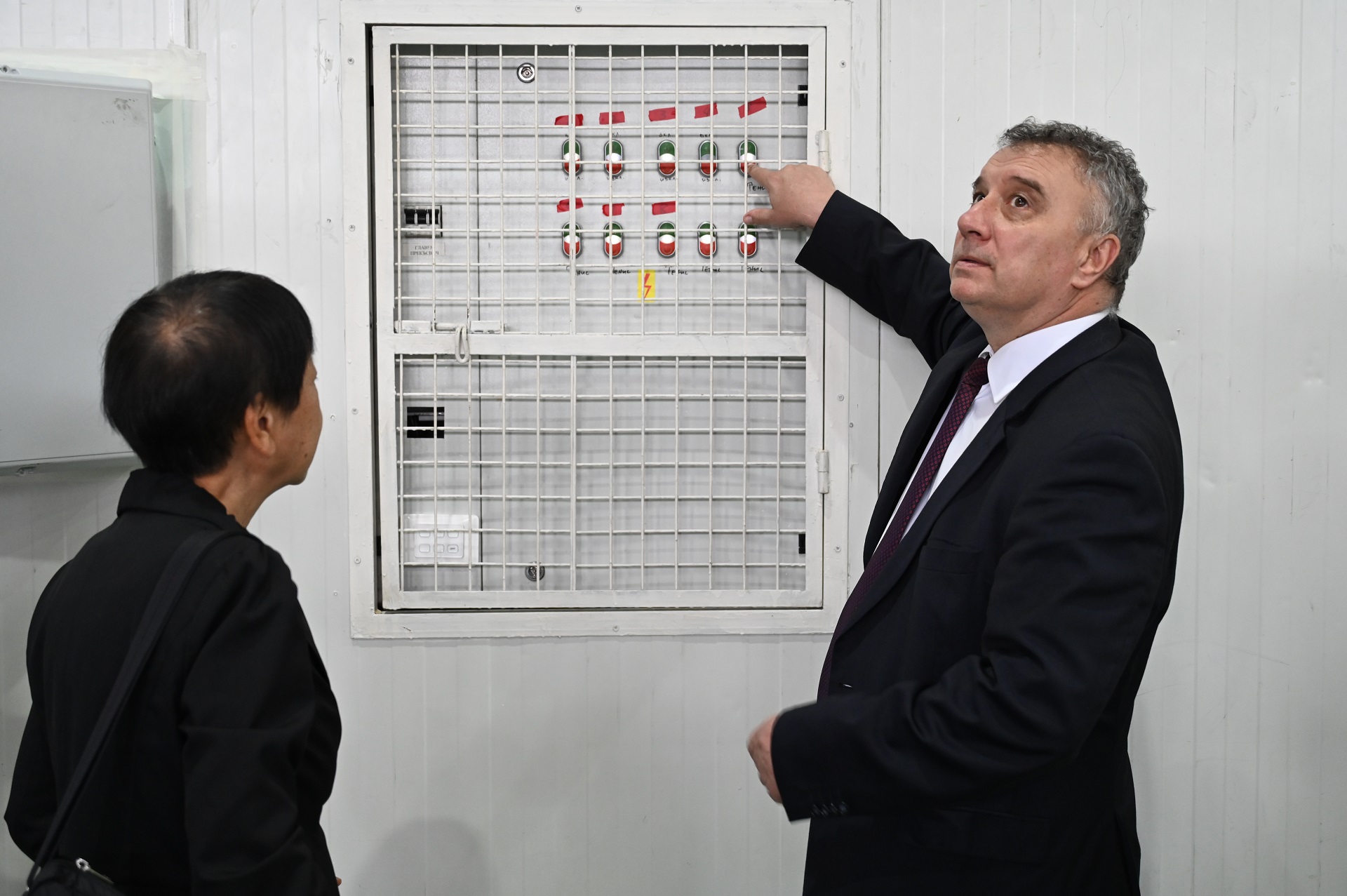
The Energy Saving Smart Lighting System was officially presented on 30 June 2023 at Bonsist Sports Complex. The total cost of the project is 120 000 USD provided for the most part by the Taiwan Environmental Information Association /TEIA/ under a contract with the UNWE to implement a project on smart lighting, energy conservation and the transition to a healthy planet and new digital world.
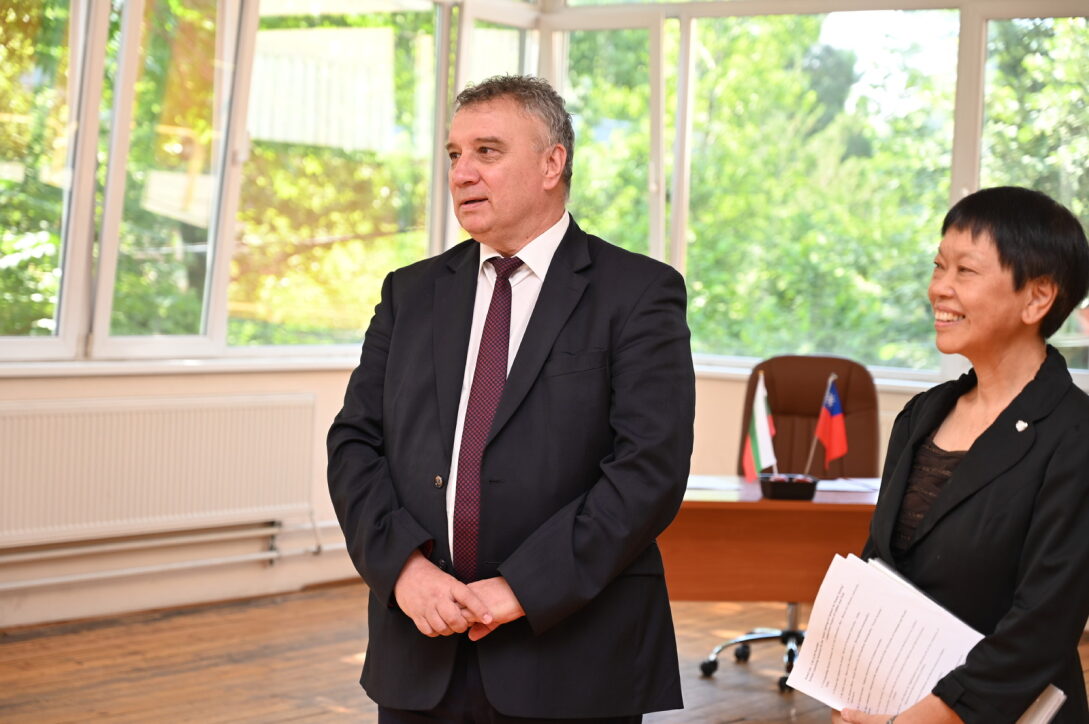 |
At the opening ceremony the main parameters, energy-saving capabilities, operating principles and benefits of the newly installed intelligent lighting system were presented in detail along with a demonstration of the system showing the capabilities of the modern facility.
 |
More Efficient Heating
The energy efficiency measures also extend to the UNWE heating system. A total of 818 thermostatic valves with thermostatic heads have been installed on the radiators and more than 50% of the main pipelines in the heating system have been repaired.
Smart control systems complement these measures by enabling remote temperature regulation and consumption optimization.
Electric Mobility
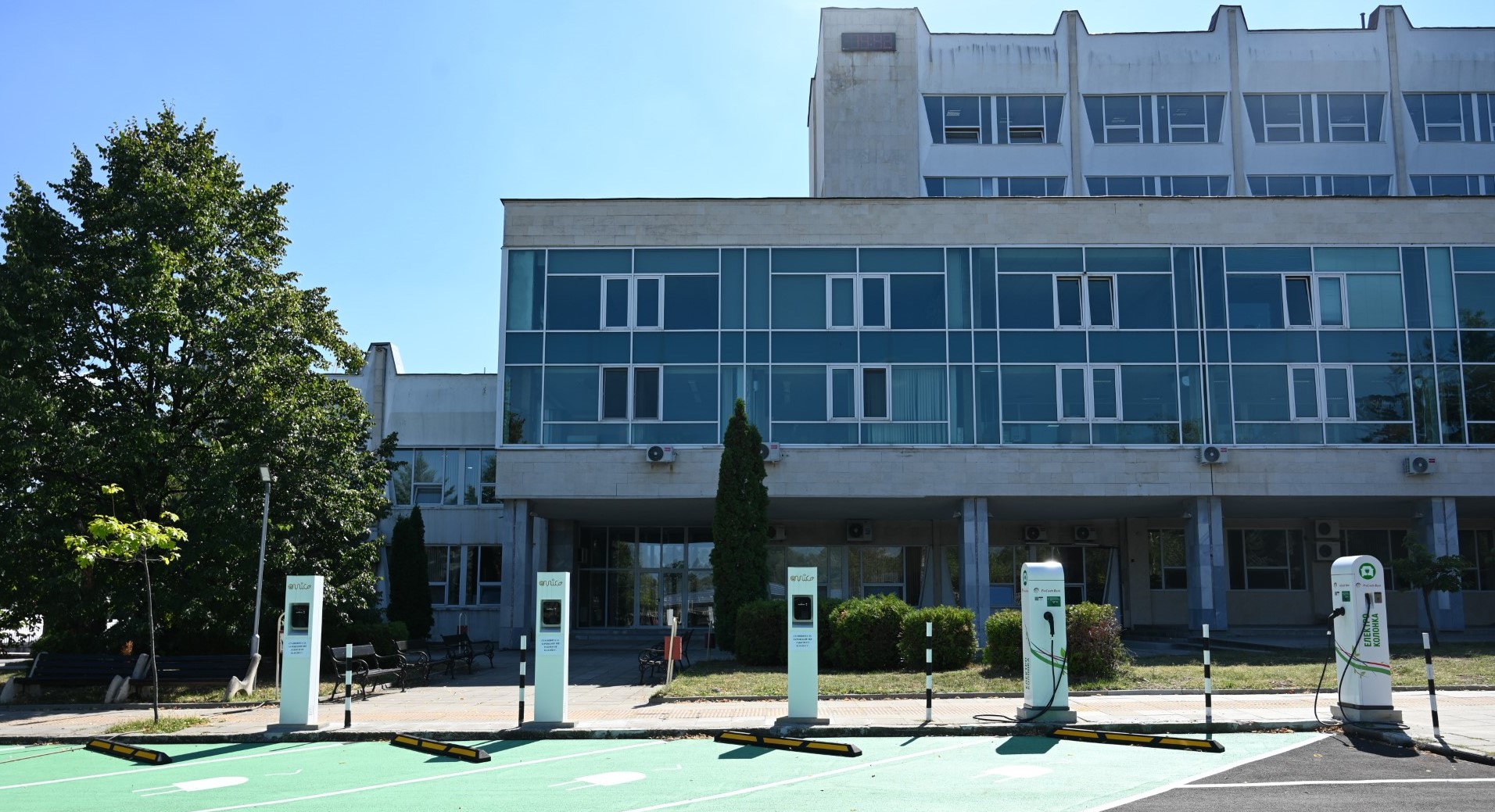
As part of efforts to create a more sustainable university environment, five charging stations for electric vehicles have been installed at the UNWE.
Charging Stations for Electric Vehicles
Since June 2022 the electric car charging stations are available at the UNWE due to the donation by the ProCredit Bank Bulgaria. Since September 2023 the five electric car charging stations Have already become an integral part of the photovoltaic park system built on the central car park and they are protected from all weather conditions.
Access to the charging stations is free for the UNWE lecturers and employees.
The development of electric vehicle infrastructure is another step toward reducing the dependence on traditional energy sources and promoting more environmentally friendly modes of transportation.
 |
Energy Saving Phone Charging Stations
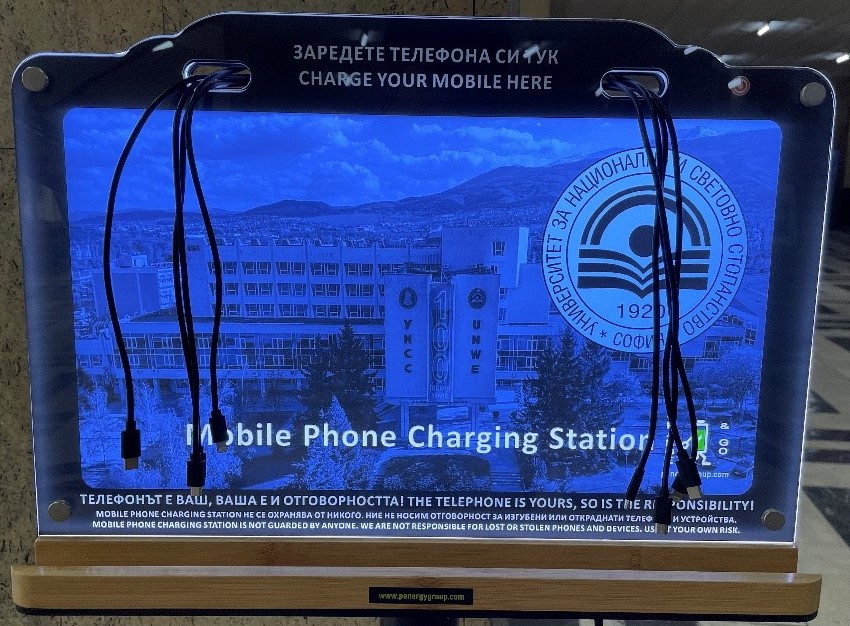
In the lobbies of the UNWE building, in the Academic Campuses A, B, G, I and the newest Academic Campus K five energy-saving charging stations for phones and tablets are installed on a stand with LED lights. They are available for all UNWE students, lecturers and employees. The stations have space for 8 devices.
 |


