
Experts from the European Stability Mechanism Explained How the Financial Stability of the Eurozone Is Ensured
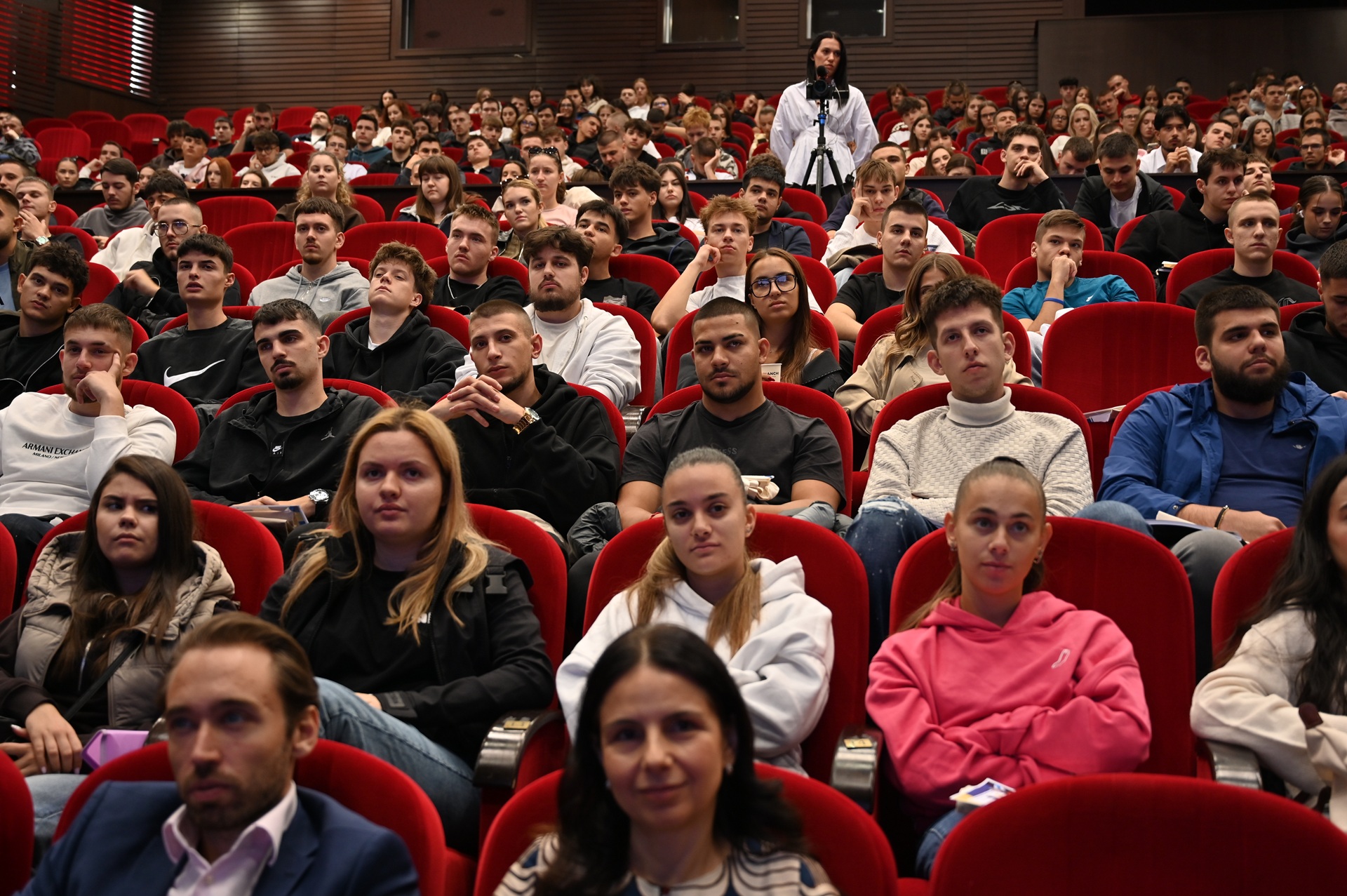
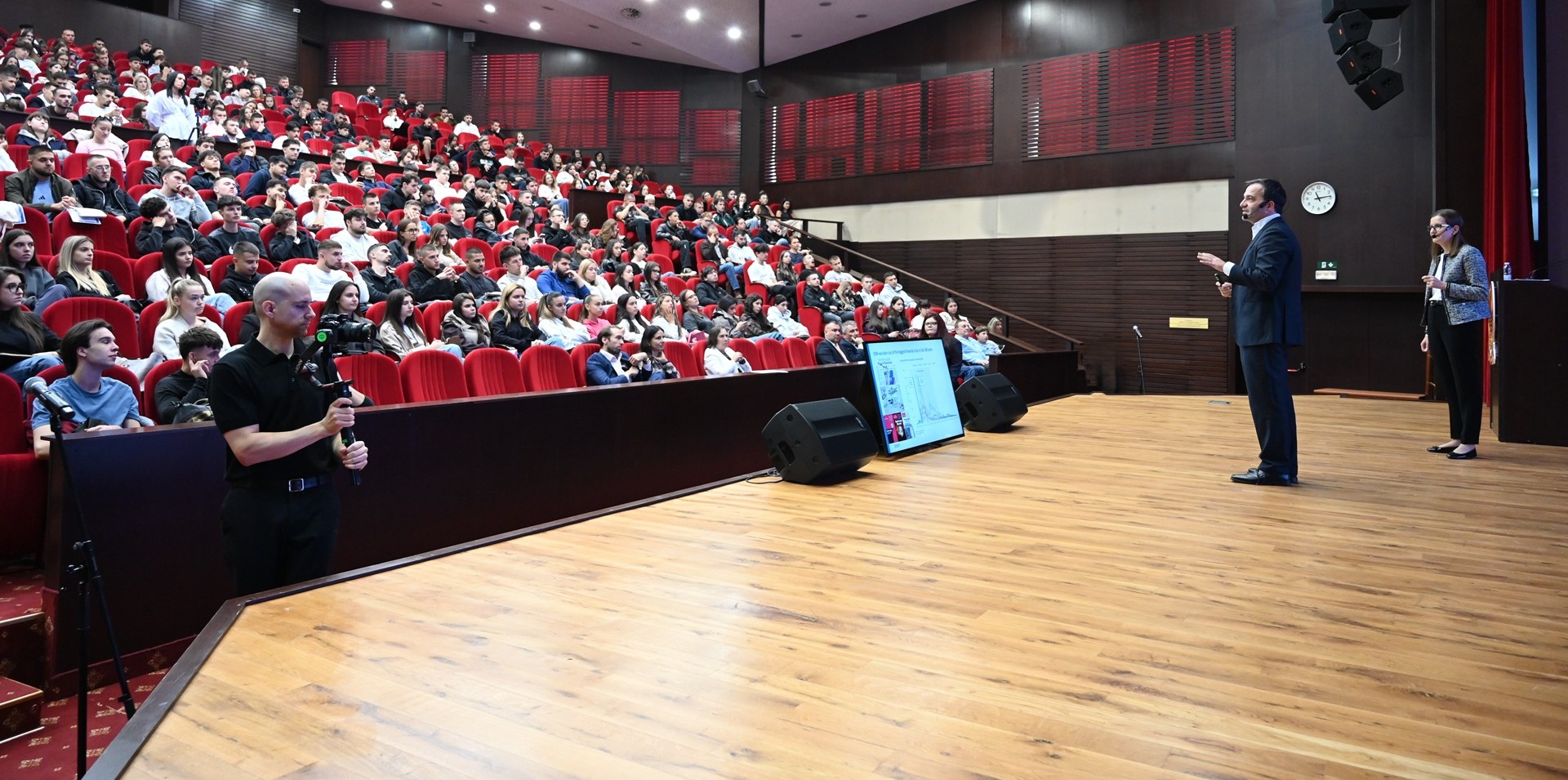
Amid strong interest, the UNWE hosted the Youth Forum of the European Stability Mechanism /ESM/ on the New Opportunities, New Future – Bulgaria and the Euro. The event brought together students and representatives of the European Stability Mechanism, namely Yana Djoneva, Chief Operating Officer of ESM, and Kalin Anev Janse, Chief Financial Officer of ESM, who explained what Bulgaria’s accession to the Eurozone and participation in the ESM mean for the country.
 |
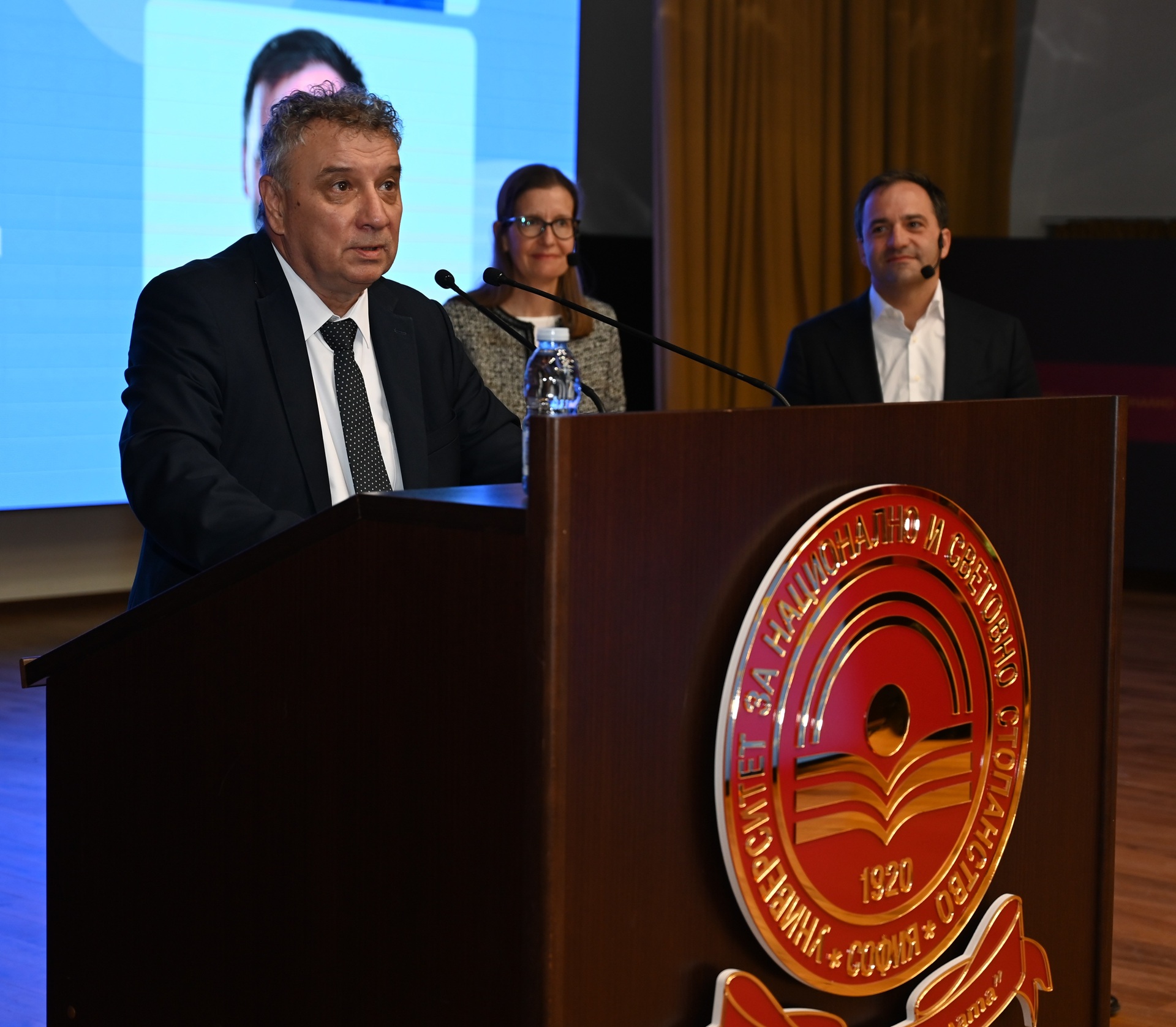
“The UNWE is the place where this meeting should take place because we make a significant contribution to the development of economic science and to educating people who work in various institutions”, emphasized the Rector of UNWE Prof. Dr. Dimitar Dimitrov /in the picture below/. “We have organized quite a few campaigns and awareness-raising activities related to the adoption of the euro in Bulgaria. The people who will later manage banks and funds and hold high-level positions are here. A few days ago, I attended a conference on blockchain technologies, which was also attended by young people, whom I addressed with the words: “Hello current and future billionaires”. I address you with the following: “Hello future millionaires and statesmen. Listen carefully and ask questions so that you can be better informed, which will contribute to your professional development”.
 |
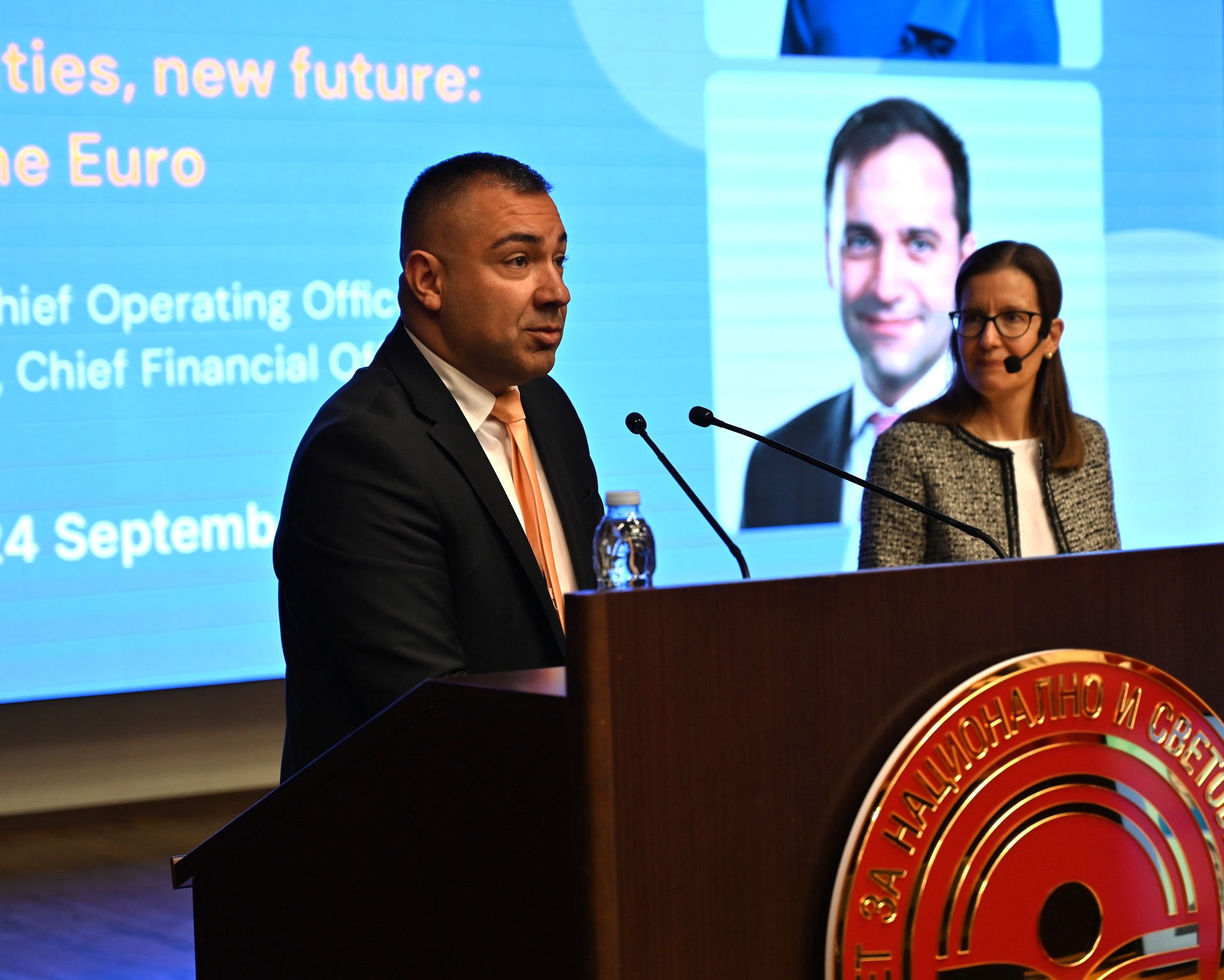
“Why is the UNWE part of this lecture? Because it’s important for us and for our students. Because Bulgaria is part of the Eurozone and the UNWE has been an active participant over the past year in all the discussions held at national level”, said Assoc. Prof. Dr. Yanko Hristozov, Vice Rector for International Affairs and lecturer in Finance /in the picture below/, in his address to the students. “We believe that this issue is extremely important for all of us - economists, financiers and everyone studying at this university.”
 |
“I will start with the biggest crisis of the past 100 years. In 2010-2011, Greece was paying yields of 30-40% on its 10-year bonds. No one expected that a European country that had previously had one of the best credit ratings would lose the ability to finance itself through the markets”, pointed out Kalin Anev Janse /in the picture below/. “After Greece, the crisis affected Portugal, Ireland, Cyprus and even Spain. This meant that a new institution had to be created in Europe - and that was the European Stability Mechanism.” Kalin Anev Janse presented some of the advantages of the Eurozone membership, including the single currency, which is the second most widely used international currency after the US dollar, as well as access to the major financial and foreign exchange markets. He also emphasized the importance of the European economy in a global context.
 |
|
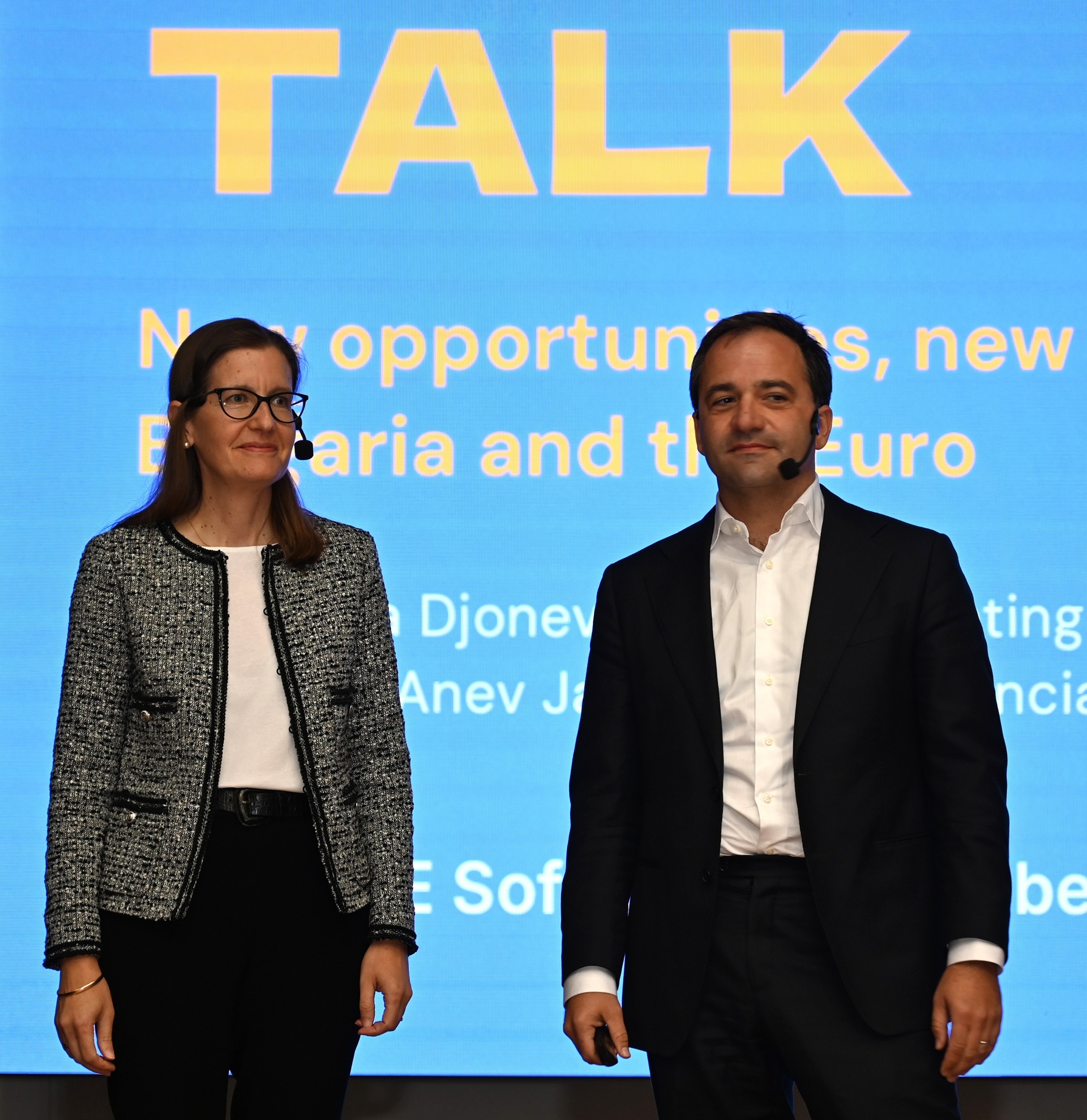
Yana Djoneva, Chief Operating Officer of ESM, and Kalin Anev Janse, Chief Financial Officer of ESM |
Yana Djoneva /in the picture above/ explained why the European Stability Mechanism was created, how it operates, and what its place is within the European Union and the Eurozone. “When the euro was created, no one expected that such a scenario could become reality, and therefore there was no mechanism to guarantee the financial stability of the countries in the Eurozone. Of course, the crisis was so serious that the heads of state took measures relatively quickly and initially created a temporary mechanism, and the affected countries were supported. This support was provided in the form of loans and was subject to very strict requirements and conditions for economic and fiscal reforms. It is very important to understand that there is no standard list of reforms that every country must implement. Bulgaria joined the European Stability Mechanism after adopting the euro.” She clarified that “the ESM is the world’s most capitalized international regional financial institution, with paid-in capital of €71 billion and a lending capacity of €500 billion - the second largest after the International Monetary Fund which, however, has a global scope. We provide loans to Eurozone countries when they face a risk of financial crisis or experiencing serious difficulties and inability to finance themselves. Of course, we don’t operate only from crisis to crisis. A significant part of our work is related to crisis prevention. How do we do this? First of all, the very existence of the ESM is a very serious stabilizing factor. Investors and international markets know that the ESM exists, that it has significant capital and a high lending capacity. This increases the confidence in the Eurozone. We also have a strong team of economists who continuously analyze risks to financial stability in the Eurozone. When we identify an increase in certain risks, we prepare relevant analyses. In this way, we play a significant role in preventing financial crises, not only in resolving them”.
Yana Djoneva presented the organization’s structure and decision-making process, with decisions being taken unanimously by all member states. “The amount of each country’s capital contribution is determined on the basis of its population and Gross Domestic Product /GDP/. From the perspective of instruments, we provide a wide range of options, not only loans linked to reforms, but also indirect lending to banks through their governments, as well as the purchase of government debt securities.” She emphasized that the ESM’s capital structure is sufficiently well-secured to enable the institution to respond to future crises as well.
 |
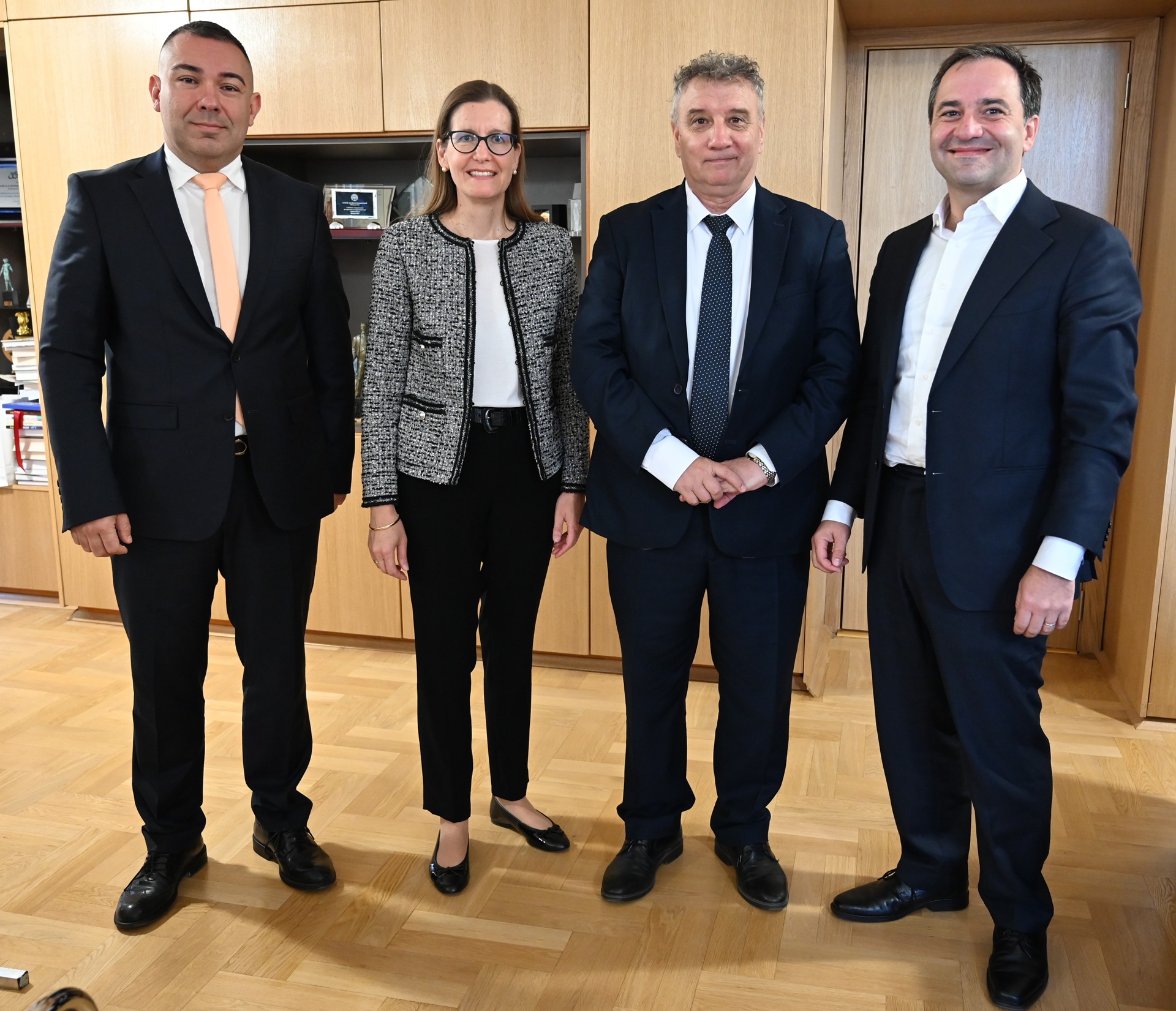
Before the meeting with the students, the experts from the European Stability Mechanism met with the Rector Prof. Dr. Dimitar Dimitrov and Assoc. Prof. Dr. Yanko Hristozov.
 |
The European Stability Mechanism is part of the EU’s strategy for ensuring financial stability within the Eurozone. It provides financial assistance to Eurozone countries experiencing, or at risk of experiencing, financial difficulties. Established in 2012 by the Eurozone countries, it issues debt instruments to finance loans and other forms of financial assistance to the eurozone countries.
The European Stability Mechanism is authorized to:
- Provide loans under a macroeconomic adjustment program;
- Purchase debt on the primary and secondary debt markets;
- Provide precautionary financial assistance in the form of credit lines;
- Finance the recapitalization of financial institutions by providing loans to the governments of member states.


