
The First National Seminar on the Memorandum of Cooperation between the Ministry of Education and Science and Quacquarelli Symonds was Held at the University
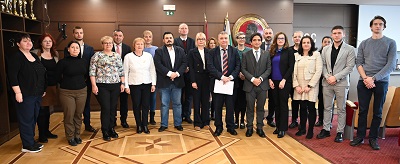
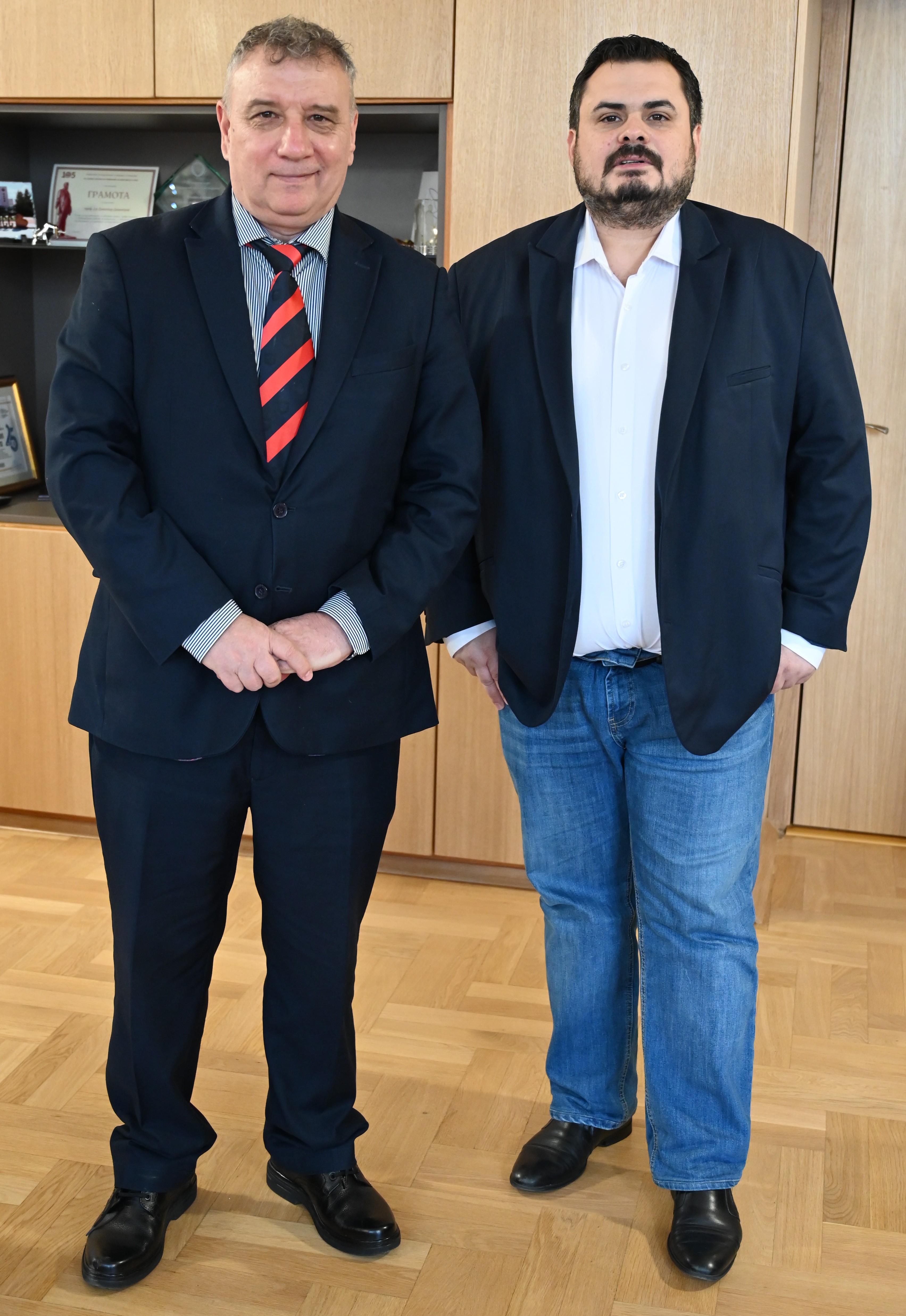
The First National Seminar within the framework of the Memorandum of Cooperation between the Ministry of Education and Science and Quacquarelli Symonds (QS) on the internationalization, student mobility, and institutional effectiveness was held at UNWE. The National Coordinator for the memorandum is Prof. Dr. Svetoslav Spasov from the National and Regional Security Department.
All Bulgarian universities were invited to the meeting. In the event took part Angel Kanchev University of Ruse, Technical University – Gabrovo, Technical University – Sofia, University of Food Technologies, Prof. Dr. Asen Zlatarov Burgas State University, American University, Thracian University, Neofit Rilsky South-West University, University of Architecture, Civil Engineering and Geodesy, University of Library Studies and Information Technologies (ULSIT), the Medical Universities in Sofia, Plovdiv, Pleven, and Varna, Nikola Yonkov Vaptsarov Naval Academy, Agricultural University in Plovdiv, St. Climent Ohridsky University of Sofia, etc.
 |
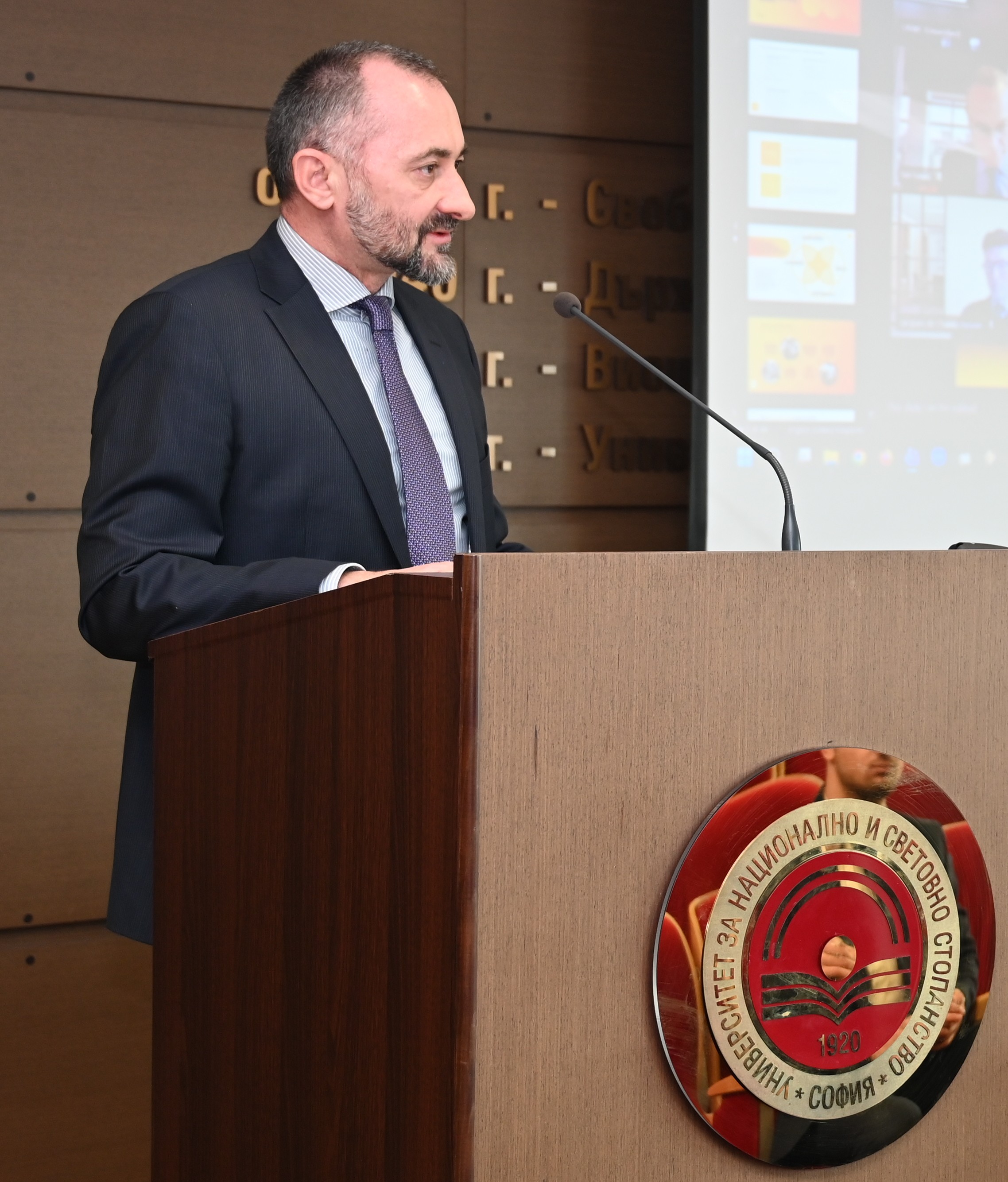
At the opening of the Seminar Prof. Dr. Svetoslav Spasov, moderator of the event, emphasized the importance of the Memorandum, whose main objective is to assist the Bulgarian universities in strengthening their international reputation, improving their positions in rankings and increasing their global visibility. He highlighted the key benefits of the partnership, which include providing access to QS digital tools, analytical resources and comparative analysis platforms that support the formulation of effective institutional strategies; support for individual universities in improving their strategic performance; coordination of participation in student recruitment initiatives and QS branding campaigns; promotion of the Bulgarian higher education system through QS media, platforms, and global events; facilitating access to QS tools and databases for policy and institutional planning purposes.
 |
“The higher education is currently in crisis, not only in Bulgaria but also in Europe”, said the Deputy Minister of Education Peter Nikolov. “Science seems to be shifting to the US and the Far East, where the big discoveries are being made and the patents are also there. The big, world-renowned universities become more flexible and more open to accepting students. We, the Bulgarian universities, are no longer competing only with each other, but also with the leading universities around the world. Another indisputable fact is the invasion of artificial intelligence. This is the environment in which we work, and it is extremely challenging because the education system is slow, and if we introduce change now, we will only see the results in 10-15 years. Let us all take note of this situation. We, in Europe, cannot respond to these challenges, but we have the tools to overcome them. One of the key tools is to make our universities more visible to the world. This is done through rankings and by investing in their reputation. That is the objective of this project. I believe it is timely and I am confident that it will be successful.
“It is a very useful initiative because the Bulgarian universities achieve a lot, but we often fail to present their success in the best possible way to the world”, emphasized the Rector Prof. Dr. Dimitar Dimitrov. “That is why we rely a lot on our partnership with QS within the framework of this project which we have been discussing and preparing training for over a year. People abroad are often surprised when we mention that Kristalina Georgieva graduated from and taught at our university and is now the Head of the IMF, or that 150 ministers are alumni or lecturers at the UNWE. But we are not communicating these facts well enough. And this affects our international activity, as many countries, such as China, Turkey, Iraq, Uzbekistan and Qatar prefer to work with universities that are among the top 500 in the world rankings."
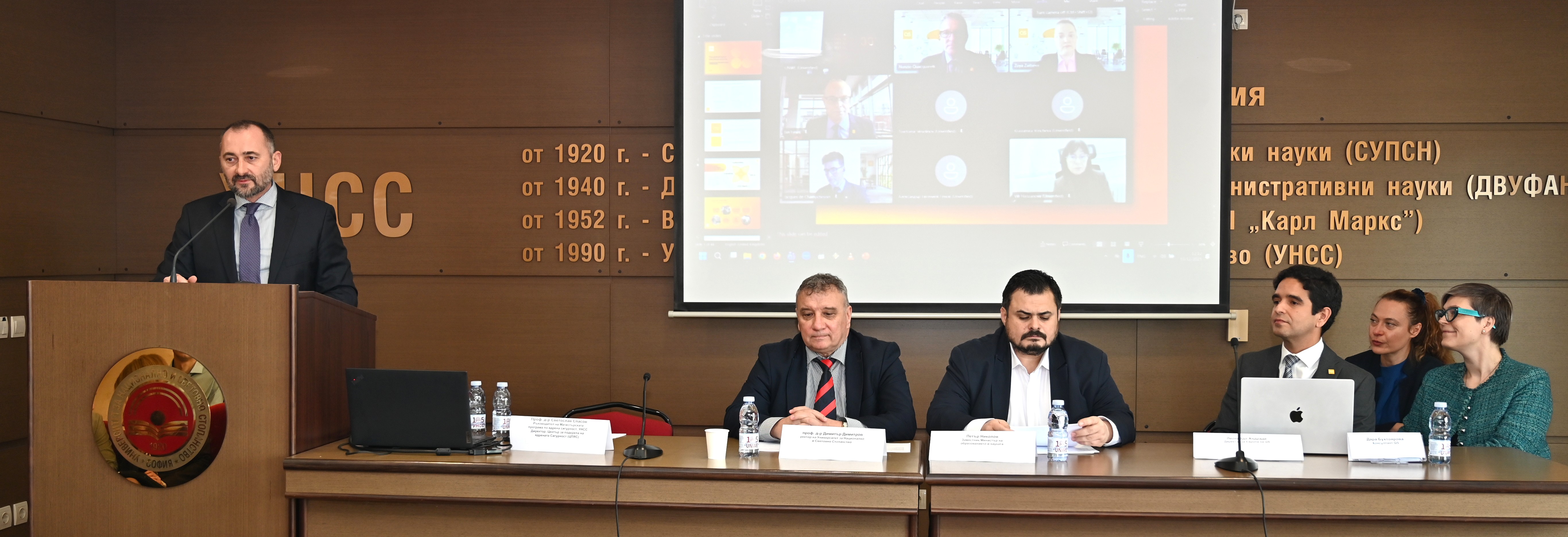 |
| Prof. Svetoslav Spasov, the Rector Prof. Dimitar Dimitrov, Peter Nikolov, the Deputy Minister of Education, Leonardo Andrade, Director for Europe at QS, and Dara Bukhtoyarova, QS Consultant |
“For us, the students, it is extremely important this project to be successfully implemented, both because of the expected improvement in the quality of education in Bulgaria and because of the opportunities that will open up for the student community and the higher level of their realization”, said Kaloyan Stefanov, Chairman of the Student Council. "We support such projects and I would like to express my gratitude to the Rector Prof. Dr. Dimitar Dimitrov and the management of UNWE, as well as to the Ministry of Education and Science for paying attention to the young people and strive to provide more opportunities for their development.”
Leonardo Andrade, Director for Europe at QS, said that during the celebration of the 10th Anniversary of the International Master's Programme in Nuclear Security, he realized the necessity for the country to attract talents from abroad and keep its own talents, as well as the importance of the higher education system in making Bulgarian universities visible internationally. He specified that during the meeting the full potential of the opportunities that can be realized within the framework of the signed Memorandum will be presented.
In a video address the Founder and President of QS Nunzio Quacquarelli pointed out that the organization's mission is to bring attention to excellence in higher education. “We believe that there is a lot of potential in education in Bulgaria that the world is not aware of. We hope to highlight these strengths, but we also believe that it is time for change and, as the Minister said, the artificial intelligence changes everything. Universities should be open to evolution and transformation and we look forward to supporting this." He pointed out that Bulgaria has the fastest percentage decline in the number of young people in Europe, which will put pressure on the higher education system and increase the necessity to attract foreign students. “The international reputation will be a key element because it is no longer enough to do good research or provide good education. You should let the world know. QS believes that we cannot do anything about your demographic decline, but we hope that we can help support your international competitiveness, your international reputation and bring your institutions in line with the changing world of work. Bulgaria has the advantage of being a low-cost provider of higher education with strengths in a number of STEM disciplines, medicine, nuclear engineering, etc., which are highly sought after, so you can build on these strengths. We are deeply committed to supporting the improvement of the quality of higher education in Europe", added the QS President. In his address Nunzio Quacquarelli announced that he had invited the Minister of Education to host the QS European Seminar in 2027 in Bulgaria with the UNWE proposed as the host. He noted that Romania has also expressed interest in hosting the 2027 edition of the Seminar.
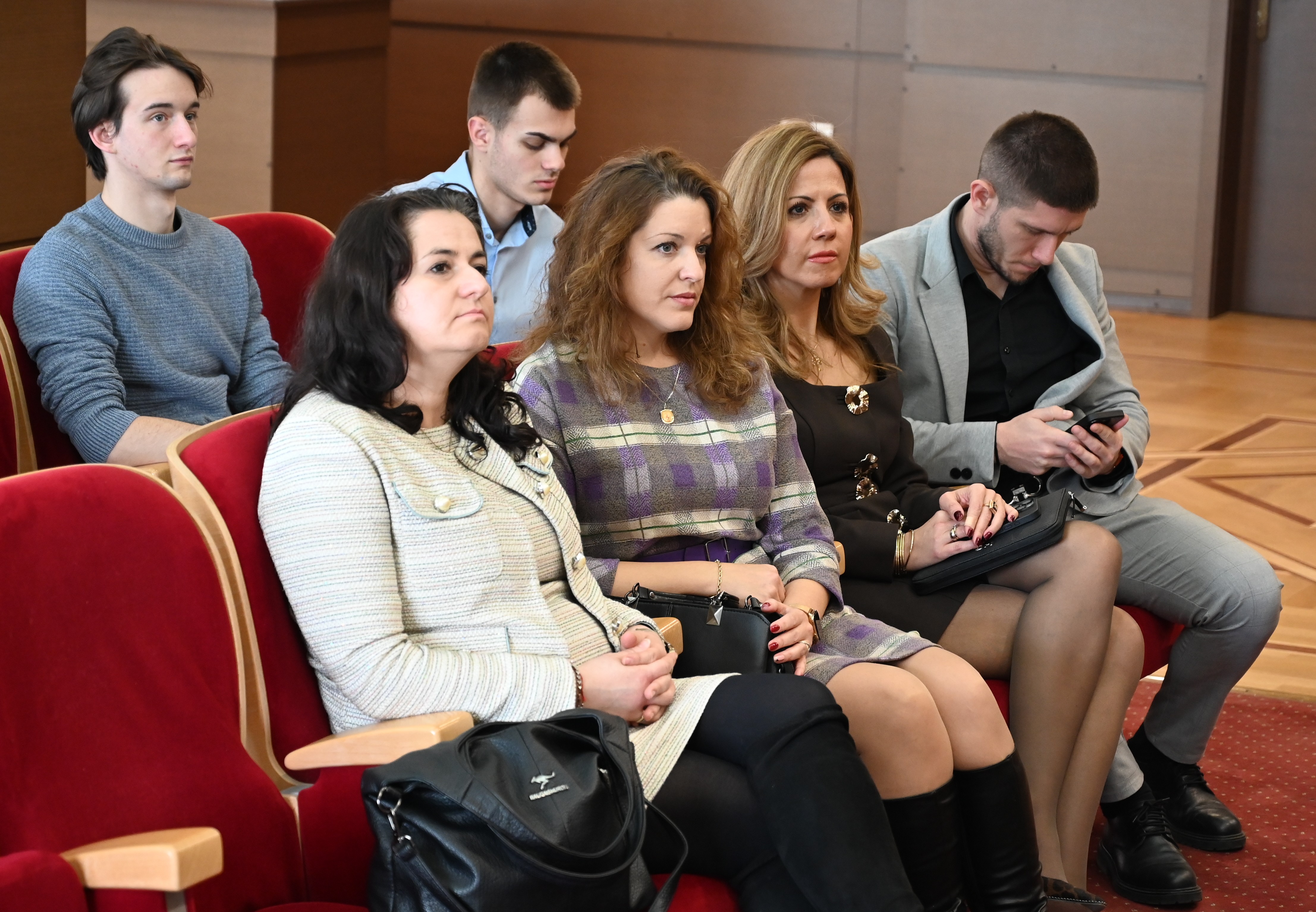 |
| Dr. Gergana Kirilova, Director of the Rector's Office, also attended the National Seminar /the third woman from left to right in the picture/ |
The event was held in two sessions. In the first session Leonardo Andrade, Director for Europe at QS, discussed opportunities for increasing the institutional visibility, effectiveness and reputation through the QS. He also spoke on topics such as methodology, impact and opportunities for Bulgarian institutions provided by the QS Rankings, strategic value and paths to global visibility with QS Stars as well as consulting and performance improvement services and how the QS supports the national strategies for international competitiveness.
In the second session QS/Maven Director Ian Lines focused on student mobility, partnerships, and global engagement. He drew attention to trends in the global student mobility, best practices for managing the international agreements, tools for improving the student recruitment channels and global reach. Ian Lines also discussed how Maven supports universities.
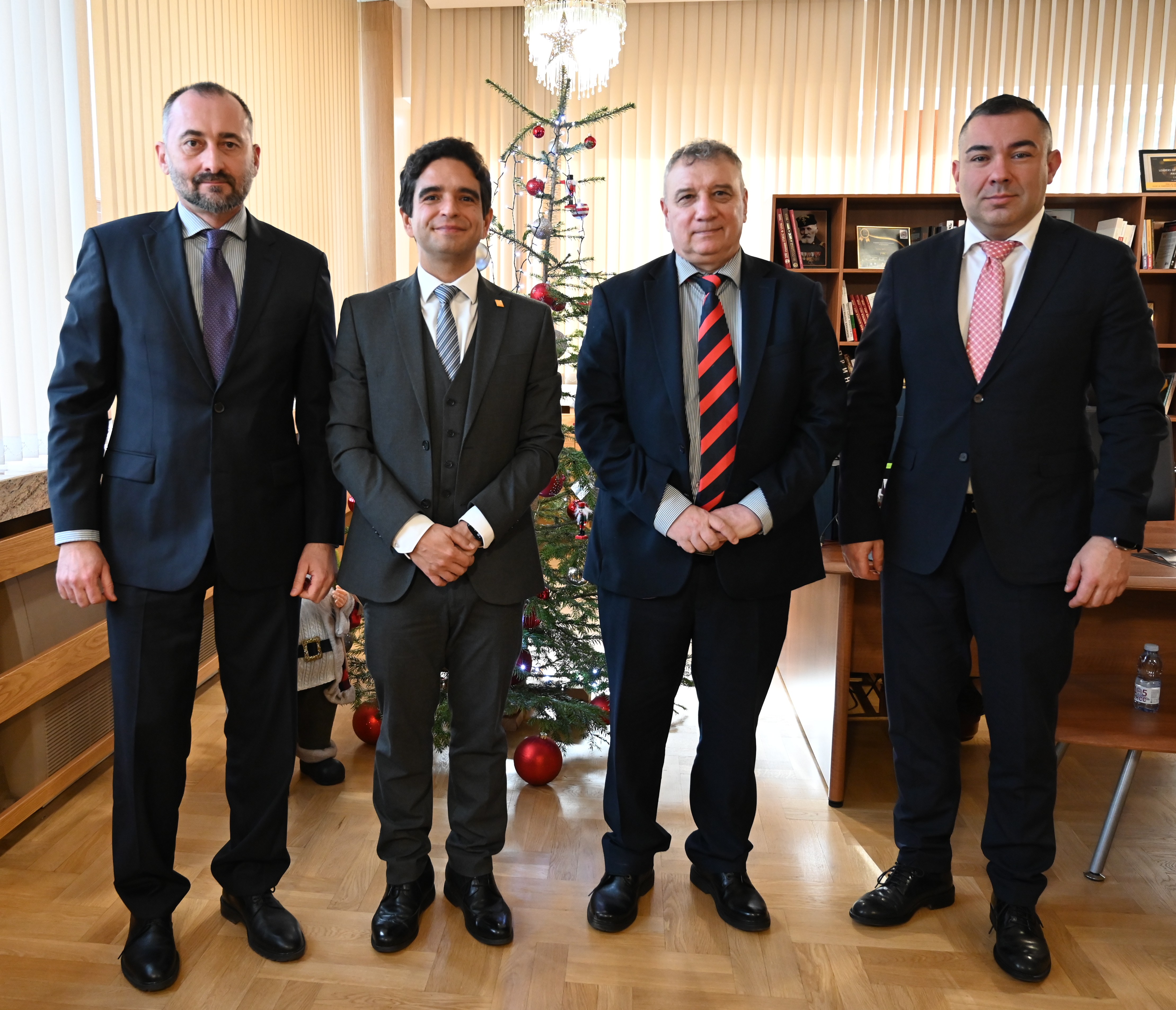
Before the start of the National Seminar the Rector Prof. Dimitar Dimitrov met with Petar Nikolov, Deputy Minister of Education, and Leonardo Andrade, Director for Europe at QS. The meeting was attended by the Vice-Rector for International Affairs Assoc. Prof. Dr. Yanko Hristozov /the man on the right in the second picture/, and Prof. Dr. Svetoslav Spasov.
 |
 |
Quacquarelli Symonds (QS) is a leading global source of comparative institutional performance assessments for students and university partners worldwide. They offer unparalleled data, expertise and solutions for the global higher education sector. Each year they publish rankings of universities and business schools, which are compiled using a core methodology that measures indicators important to students, including reputation among employers, academic circles, student experience, and research activity. The data is based on high-quality research and innovative analytical approaches. QS rankings allow students to choose the right university for their goals. Not all higher education institutions are eligible for ranking, and not all eligible institutions are ranked.
The most comprehensive ranking is the QS World University Rankings which highlights the best institutions from around the world. It uses data from 16.4 million academic articles, the opinions of more than 151,000 academics, and 100,000 employers.
